The industry is buying AI to solve the wrong problem
In 2024, 11.8% of Americans moved. That is down from 12.1% the year before and it is the lowest rate in Census records going back to 1948. A decade ago it was around 14 percent. In the 1960s it was 20 percent. Your addressable market has been shrinking for most of your career.
Meanwhile fuel is up, insurance premiums are up, and agents are consolidating into holding alliances. Every AI vendor walking into your association meeting is selling the same answer to that squeeze: fewer estimator hours per job.
I think that is the small prize, and it is the one that frightens your crews. When the number of moves is at a 77-year low, the scarce resource is the lead. The company that survives this consolidation is the one that quotes first and closes more of what it already had.
Your close rate is your growth problem, and your estimators are the ones who can fix it.
Why I can say that with a straight face
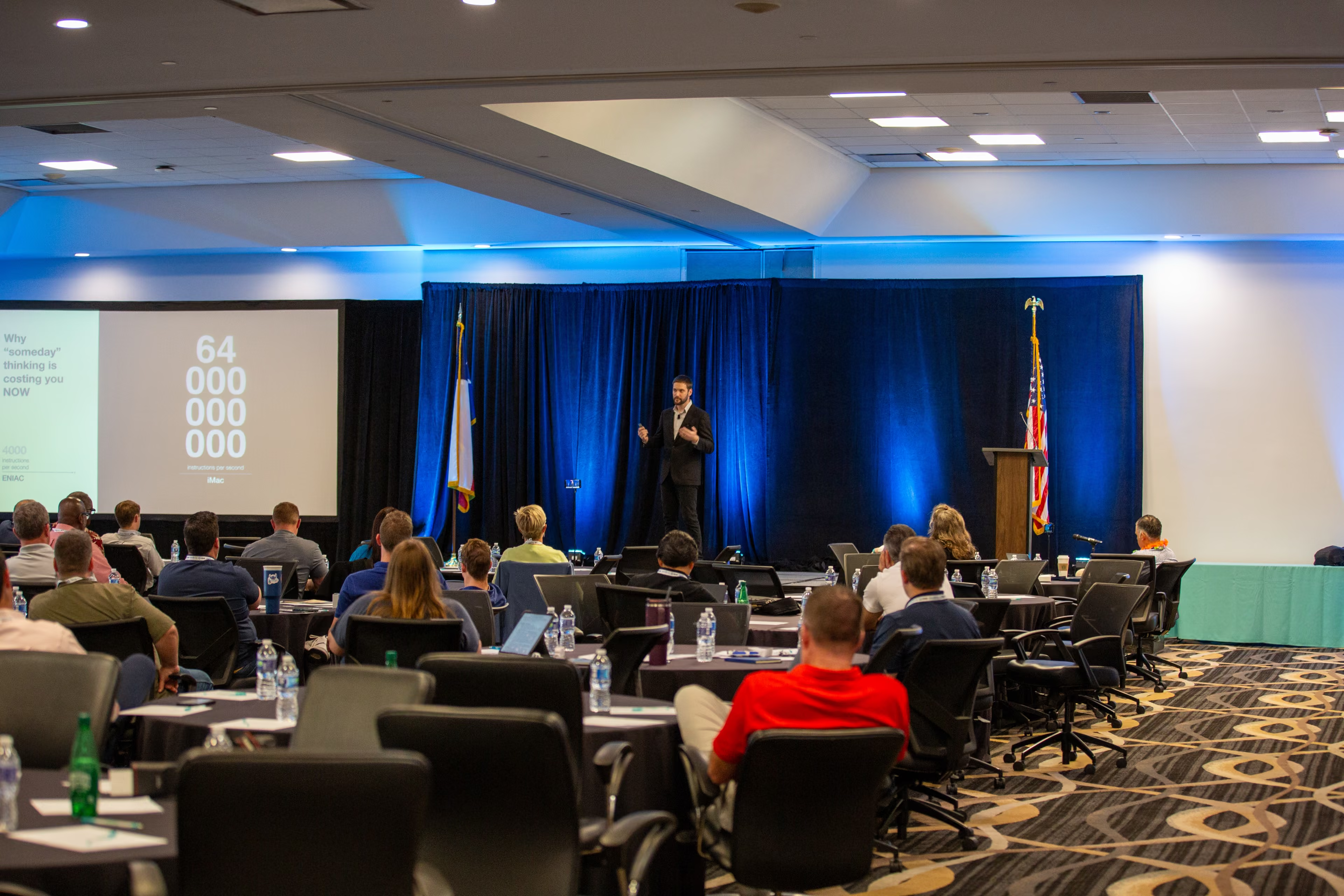
At Yembo I built AI that surveys a home from a video walkthrough. It identifies the items, estimates the volume, and produces the inventory in minutes rather than a scheduled visit. Movers in more than 20 countries run it every day, which means I did not model this argument. I watched it happen, at scale, for a decade.
I also watched the parts that went badly, and those are usually the more useful half of the session: the pilots that stalled, the crews who did not trust the first version, and the estimates the model got wrong before we fixed them. Your members have heard the sales pitch already. They have not heard an operator tell them which parts were oversold and what it cost to find out.
The split nobody is planning for
Consumer mobility is at a record low while corporate demand moves the other way. Atlas Van Lines surveyed 549 relocation decision-makers for its 2026 Corporate Relocation Survey and found more companies increasing employee moves and budgets, alongside more employees turning those moves down over housing and family.
That is two different businesses pulling apart, and it changes where automation pays. Household goods, commercial relocation, and international moving each break in a different place: survey capacity in peak season, consistency across a partner network you do not control, square footage and elevator access instead of a living room. Fine art and high-value collections sit at the far end, where the inventory is also the insurance record and the tolerance for a missed item is zero.
I shape the examples around whichever of those rooms I am standing in. If your members handle high-value collections, my work on AI for fine art logistics goes deeper on documentation, and AI for insurance covers what your carrier is doing with the same technology.