Yembo needed every finding closed on a deadline, with proof
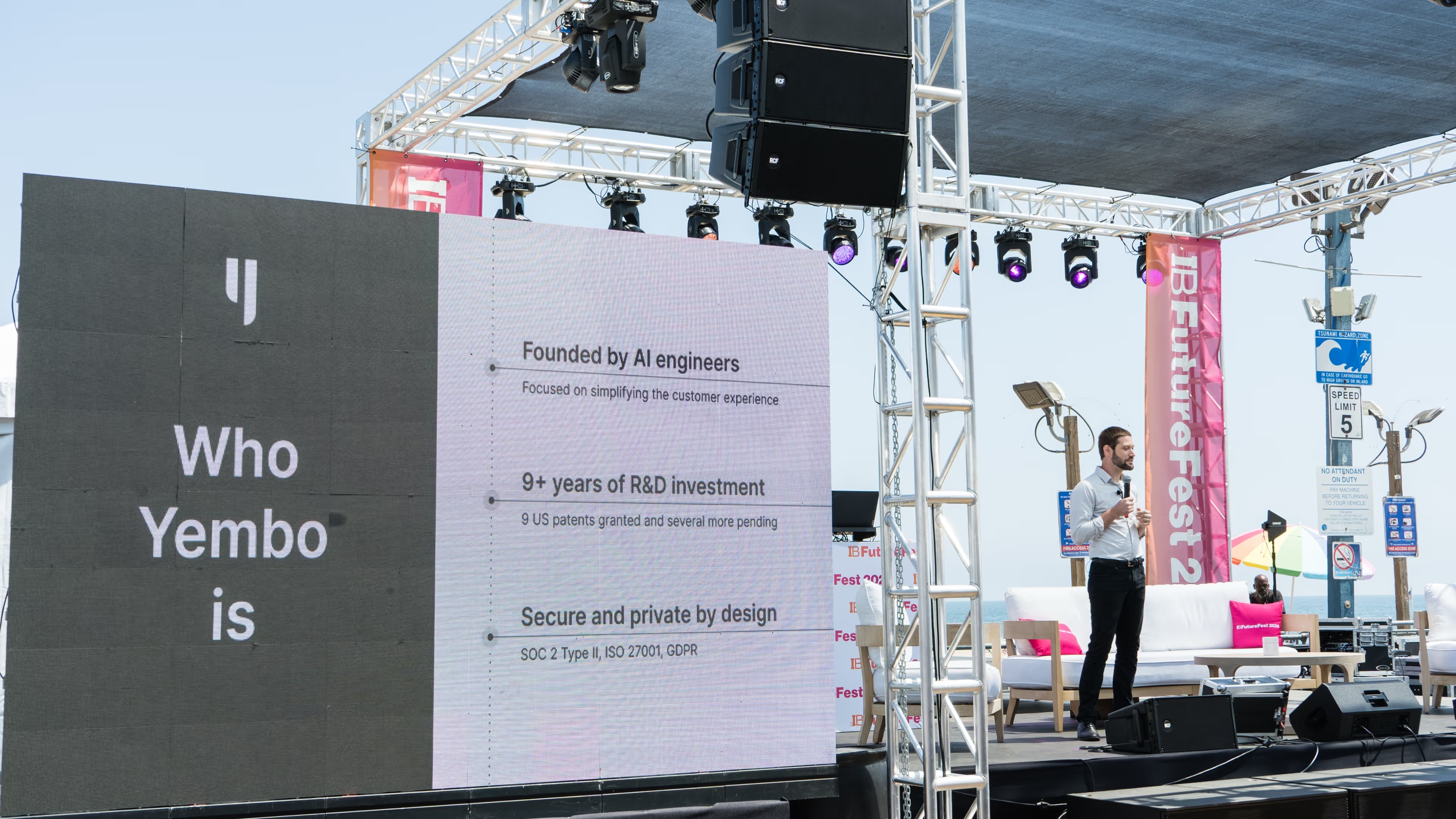
Yembo runs AI over video of the inside of people’s homes. That’s about as sensitive as customer data gets, and it’s why we hold ourselves to ISO 27001, SOC 2 Type II, and GDPR at the same time.
Each of those frameworks asks the same question about a vulnerability. When did you find it, when did you fix it, and how do you know the fix worked? Answering it for every finding, every audit cycle, was eating engineering time we wanted on the product.
So I built the part that was missing.
Findings from our scanners now go to Robochicken instead of a backlog. It writes the patch, runs our tests, opens the pull request, and asks the scanner to re-test after we deploy. An engineer still reviews every change. What they no longer do is start from a blank editor and a vulnerability description.
Most of the volume is the supply chain. Robochicken monitors hundreds of CVEs a week across Yembo’s dependencies and opens a pull request only for the ones that apply to our code. A CVE that doesn’t apply never becomes a pull request, so the ones that arrive are worth a reviewer’s time.
And when the auditor asks, the answer is already attached to the pull request: the finding, the fix, the passing tests, and the clean re-scan, with timestamps.
We built it for ourselves. Most teams need it more than we did.