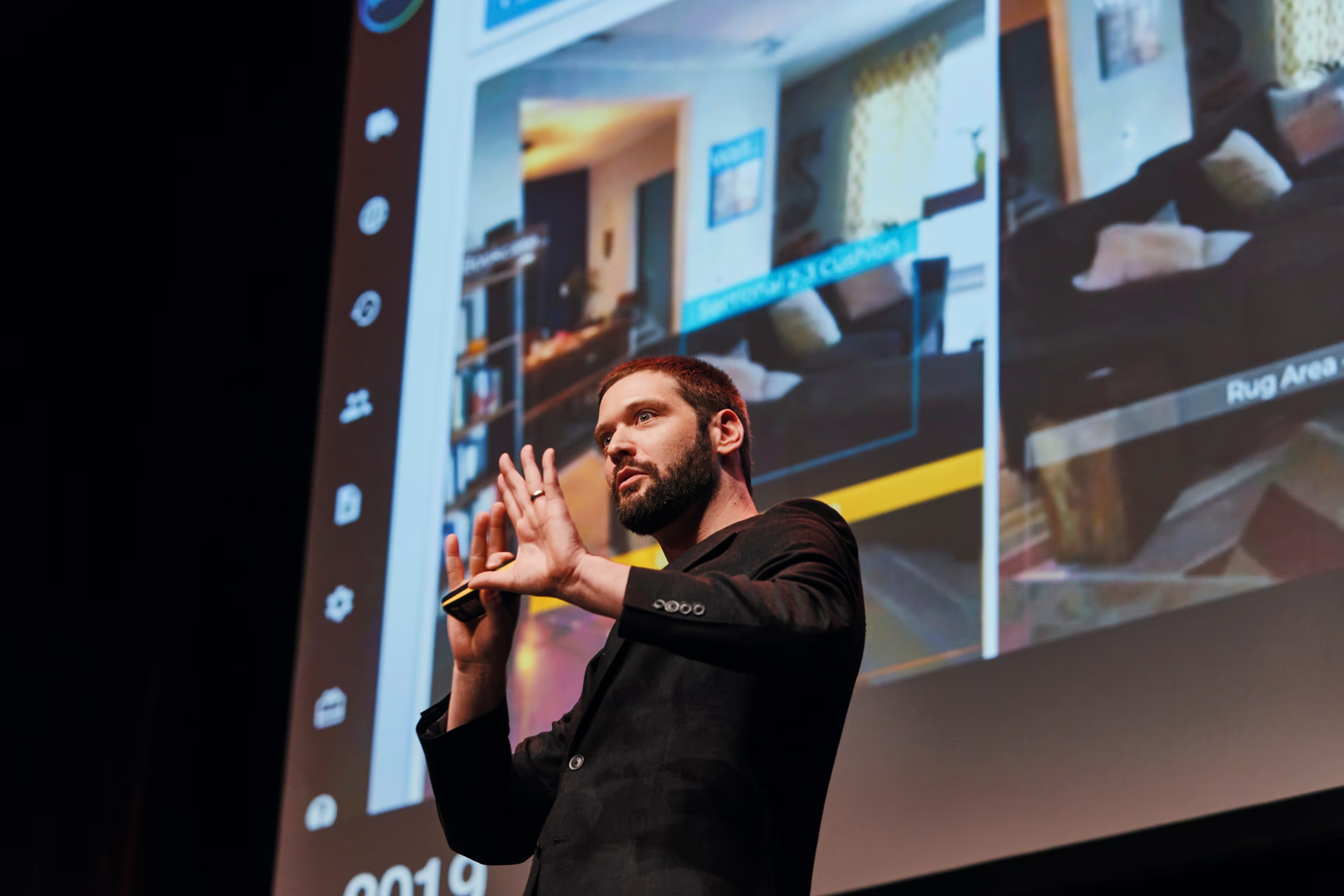
Zach on stage actively gesturing with his hands during a tech presentation, with a large screen behind him displaying computer vision or AR technology identifying furniture in a room.

AI for interior design

Your taste is safe. The hours you bill around it are the problem, and nobody is talking about that honestly.

Format

Keynote or Workshop

Delivery

In Person & Virtual

Audience

Studios & Trade Shows

Fees from

$10,000+

The threat is to the invoice, not the craft

Showing your client three design directions used to mean briefing a studio and waiting somewhere between five days and three weeks, which one industry analysis puts at 15 to 25 billable hours. Firms using AI visualization now report reclaiming 14 or more hours a week.

Every other industry hears that as pure upside. You should not, and I suspect you already know why.

If you bill by the hour, those reclaimed hours are revenue that left the invoice. Your judgment is still in the work, the client still gets a better result, and the studio gets paid less for producing it. That is the actual mechanic behind the anxiety in this industry, and the tool vendors are never going to raise it.

AI threatens a pricing model that charges for the parts a machine now does in thirty seconds. Your judgment stays in the work.

Where I come into this

At Yembo I built ScanMyHome: walk a room with a phone and get back a measurement-grade floor plan, dimensions, wall cutouts, and an itemized list of what is in it. Teams in more than 20 countries use that capture, and your first visit stops being a measuring exercise. That is the unglamorous half of a first visit, and it is the half genuinely about to change.

I should be equally direct about what I am not. I am a technologist rather than a designer, I have never specified a room in my life, and nobody should book me to talk about taste. What I can tell you is which parts of your process a machine is genuinely good at now, which parts it is confidently bad at while sounding certain, and where that line sits this year rather than last.

The other thing I bring is not a design subject at all. I have watched a professional services business reprice itself when software absorbed the hours it used to bill, which is the conversation your studio is going to have whether or not anyone schedules it. That transition is survivable, and it is far more survivable early.

My work on AI for construction and remodeling covers the same capture problem on the build side of a project, which is usually the other half of this conversation. For studios weighing a working session instead of a talk, the agentic workflows workshop maps your own processes end to end.

Where I have taught and spoken

CiscoEtsyCarMaxPMIAICPA & CIMAVirginia TechCal State FullertonCydcorArkusNexusIAMEPAAUX BrightonBrighton SEO

Bring this to your studios

Tell me the audience and the date, and I will tell you whether I am the right fit. If your event is better served by someone else, I will say so.

Most teams book the full day: the keynote plus the AI Opportunity Audit, a four-hour working session on your own workflows, at $25,000 flat.

See All Speaking Programs

Questions program chairs ask

Does Zach Rattner speak to interior design audiences?
Yes. Zach Rattner speaks to design studios, industry associations, and the trade shows serving residential and commercial interior design. His talks cover how AI changes capture, visualization, and client iteration, and what that does to a firm that bills by the hour.
Will AI replace interior designers?
Zach Rattner argues that AI threatens the billing model built around drafting and visualization time, while design judgment stays in the work. Studios report reclaiming meaningful hours a week as concept visualization compresses from days to seconds, and AI-generated concepts still require professional validation for structural feasibility and code. The firms that do well are the ones that move toward value-based pricing before those hours disappear from the invoice.
What does Zach Rattner know about capturing interior spaces?
Zach Rattner is the co-founder and Chief Technology Officer of Yembo, an AI platform used in more than 20 countries that turns a video walkthrough of a room into dimensions and an itemized inventory. He holds 31 granted US patents, many covering computer vision applied to measuring and identifying objects in interior spaces.
What does Zach Rattner bring to interior design audiences?
Zach Rattner is a technologist rather than a designer, and Yembo is a capture and inventory platform rather than a design tool. What he brings to design audiences is the engineering behind room capture, and the experience of watching a professional services business reprice itself when software absorbs hours it used to bill.
What are Zach Rattner's speaking fees?
Zach Rattner's speaking fees start at $10,000 USD plus travel. The final number depends on the event type, the location, and whether the booking includes a workshop or a follow-up session.
Does Zach Rattner run workshops for design studios?
Yes. Alongside keynotes, Zach Rattner runs working sessions for teams of 8 to 25 people, where the group maps its own intake, measurement, visualization, and client approval workflows and leaves with a ranked list of what to automate and what to keep as billable expertise.